Vegetos

(An International Journal of Plant Research & Biotechnology)
LC-QTOF-MS analysis of phenolic compounds in Origanum compactum (Benth) aqueous extracts and assessment of their antioxidant potential
*Article not assigned to an issue yet
El Finou Hamza, Verheust Yannick, Raes Katleen, Zaid Abdelhamid, El Rhaffari Lhoussaine
Research Articles | Published: 13 January, 2026
First Page: 0
Last Page: 0
Views: 75
Keywords: Antioxidant, Endemic, n Origanum compactum (Benth), Phenolic compounds, LC-QTOF-MS
Abstract
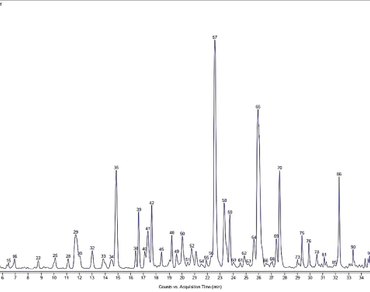
Origanum compactum Benth (Lamiaceae), known locally as ’’zaatar’’ one of five Origanum species endemic to Morocco, is relatively widely distributed in Morocco, particularly in the Rif region (Northern Morocco) and in the middle and high Atlas. This study aimed to investigate the chemical composition and antioxidant potential of aqueous extracts from the Origanum compactum (Benth) leaves. Qualitative profiling was carried out using ultra-high-performance liquid chromatography coupled with quadrupole time-of-flight mass spectrometry (LC-QTOF-MS). Furthermore, the antioxidant capacity was assessed through the 2,2-diphenyl-1-picrylhydrazyl (DPPH) radical scavenging assay and the ferric reducing antioxidant power (FRAP) test. The results obtained showed an important antioxidant capacity with an IC50 of 31.32 ± 0.13 µg/mL for DPPH assay and 193.75 ± 1.47 AAE/g DM (expressed as ascorbic acid equivalent per g of dry matter) for FRAP assay. Through LC-QTOF-MS analysis, a total of 29 phenolic compounds were characterized across several chemical classes, among which salvianolic acids A and B, rosmarinic acid, and chlorogenic acid were identified as the major constituents. This study revealed that Origanum compactum (Benth) extracts contain various phenolic compounds and display potential as natural antioxidant agents for preventing oxidative stress.
References
Aboukhalid K, Lamiri A, Agacka-Mołdoch M et al (2016) Chemical polymorphism of Origanum compactum grown in all natural habitats in Morocco. Chem Biodivers. https://doi.org/10.1002/cbdv.201500511
Ayar-Sümer EN, Verheust Y, Özçelik B, Raes K (2024) Impact of lactic acid bacteria fermentation based on biotransformation of phenolic compounds and antioxidant capacity of mushrooms. https://doi.org/10.3390/foods13111616. Foods
Babili F, El, Bouajila J, Souchard JP et al (2011) Oregano: chemical analysis and evaluation of its antimalarial, antioxidant, and cytotoxic activities. J Food Sci. https://doi.org/10.1111/j.1750-3841.2011.02109.x
Boutahiri S, Eto B, Bouhrim M et al (2022) Lavandula pedunculata (Mill.) Cav. Aqueous extract antibacterial activity improved by the addition of salvia Rosmarinus Spenn., salvia Lavandulifolia Vahl and Origanum compactum Benth. https://doi.org/10.3390/life12030328. Life
Bower AM, Real Hernandez LM, Berhow MA, De Mejia EG (2014) Bioactive compounds from culinary herbs inhibit a molecular target for type 2 diabetes management, dipeptidyl peptidase IV. J Agric Food Chem. https://doi.org/10.1021/jf500639f
Chew YL, Goh JK, Lim YY (2009) Assessment of in vitro antioxidant capacity and polyphenolic composition of selected medicinal herbs from leguminosae family in Peninsular Malaysia. Food Chem. https://doi.org/10.1016/j.foodchem.2009.01.091
Chroho M, Bouymajane A, Aazza M et al (2022) Determination of the phenolic Profile, and evaluation of biological activities of hydroethanolic extract from aerial parts of Origanum compactum from Morocco. Molecules. https://doi.org/10.3390/molecules27165189
Dührkop K, Fleischauer M, Ludwig M et al (2019) SIRIUS 4: a rapid tool for turning tandem mass spectra into metabolite structure information. Nat Methods 16:299–302
Dührkop K, Shen H, Meusel M et al (2015) Searching molecular structure databases with tandem mass spectra using csi:fingerid. Proc Natl Acad Sci 112:12580–12585
Finou H, El, Salhi N, Halmoune A, Rhaffari L (2023) El ethnobotanical survey of aromatic and medicinal plants used in traditional medicine and agri-food in the fez-meknes region. Biology, Medicine, Nat Product Chem. https://doi.org/10.14421/biomedich.2023.121.133-141
Grevsen K, Fretté XC, Christensen LP (2009) Content and composition of volatile terpenes, flavonoids and phenolic acids in Greek oregano (Origanum vulgare L. ssp. hirtum) at different development stages during cultivation in cool temperate climate. Eur J Hortic Sci 74:193–203
Gutiérrez-Grijalva EP, Picos-Salas MA, Leyva-López N et al (2018) Flavonoids and phenolic acids from oregano: Occurrence, biological activity and health benefits. Plants 7:2
Ho H, Ho T, Minh C et al (2023) Extraction of polyphenols from mentha aquatica Linn. var. Crispa. Agriculturae Conspectus Scientificus 88:37–42
Kim GD, Park YS, Jin YH, Park CS (2015) Production and applications of Rosmarinic acid and structurally related compounds. Appl Microbiol Biotechnol 99:2083–2092
Mollica A, Stefanucci A, Macedonio G et al (2019) Chemical composition and biological activity of capparis spinosa L. from Lipari Island. South Afr J Bot. https://doi.org/10.1016/j.sajb.2018.02.397
Newman DJ, Cragg GM (2007) Natural products as sources of new drugs over the last 25 years. J Nat Prod 70:461–477
Oreopoulou A, Tsimogiannis D, Oreopoulou V (2019) Extraction of polyphenols from aromatic and medicinal plants: an overview of the methods and the effect of extraction parameters. Polyphenols Plants. 243–259
Oyaizu M (1986) Studies on products of Browning reaction. Antioxidative activities of products of Browning reaction prepared from glucosamine. Japanese J Nutr Dietetics. https://doi.org/10.5264/eiyogakuzashi.44.307
Turkmen N, Sari F, Velioglu YS (2006) Effects of extraction solvents on concentration and antioxidant activity of black and black mate tea polyphenols determined by ferrous tartrate and Folin-Ciocalteu methods. Food Chem. https://doi.org/10.1016/j.foodchem.2005.08.034
Zeroual A, Eloutassi N, Chaouch M, Chaqroune A (2020) antimicrobial, antioxidant activity, and chemical composition of Origanum compactum Benth from taounate province, North Morocco. Asian J Pharm Clin Res. https://doi.org/10.22159/ajpcr.2020.v13i3.36319
Zgórka G, Glowniak K (2001) Variation of free phenolic acids in medicinal plants belonging to the lamiaceae family. J Pharm Biomed Anal. https://doi.org/10.1016/S0731-7085(01)00354-5
Author Information
Department of Biology, Laboratory of Natural Resources, Health and Environment, Faculty of Sciences Meknes, Moulay Ismail University of Meknes, Meknes, Morocco